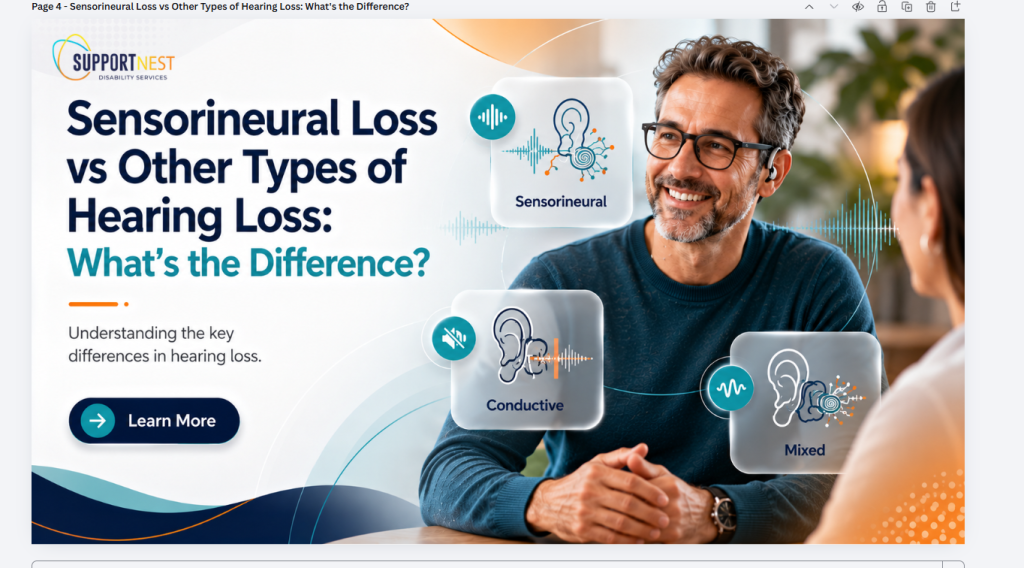
Sensorineural Loss vs Other Types of Hearing Loss: What’s the Difference? | Support Nest
Introduction
Hearing plays a vital role in communication, learning, and maintaining social connections. When hearing difficulties develop, understanding the underlying cause is essential for accessing the right support and treatment. One of the most common forms of hearing impairment is Sensorineural Loss, but it is not the only type of hearing loss that individuals may experience.
At Support Nest, we understand how hearing challenges can affect everyday life, independence, and overall wellbeing. Whether hearing loss occurs due to ageing, illness, injury, or other factors, knowing the differences between various types of hearing loss can help individuals and families make informed decisions about care and support.
For a broader understanding of Sensorineural Loss, visit our dedicated resource page here: Sensorineural Loss.
Key Takeaways
Understanding the different types of hearing loss can help individuals access the most appropriate treatment, support services, and assistive technologies. This guide explains what Sensorineural Loss is, how it differs from conductive and mixed hearing loss, common causes and symptoms, available treatment options, and how disability support services can help people maintain their independence and quality of life.
What Is Sensorineural Loss?
Sensorineural Loss occurs when there is damage to the inner ear (cochlea) or the auditory nerve pathways that carry sound signals to the brain. It is the most common type of permanent hearing loss and often develops gradually over time.
Unlike some forms of hearing loss that can be medically treated or reversed, Sensorineural Loss is usually permanent. However, many people successfully manage the condition through hearing aids, cochlear implants, communication strategies, and support services.
Common Causes of Sensorineural Loss
Several factors may contribute to Sensorineural Loss, including:
- Age-related hearing changes
- Prolonged exposure to loud noise
- Genetic conditions
- Viral infections
- Head injuries
- Certain medications
- Neurological disorders
Common Symptoms
People experiencing Sensorineural Loss may notice:
- Difficulty understanding conversations
- Trouble hearing in noisy environments
- Frequently asking others to repeat themselves
- Muffled or distorted sounds
- Ringing in the ears (tinnitus)
- Difficulty hearing high-pitched sounds
Understanding Conductive Hearing Loss
Conductive hearing loss occurs when sound cannot travel efficiently through the outer or middle ear to reach the inner ear.
This type of hearing loss is often temporary and may be treatable depending on the underlying cause.
Common Causes of Conductive Hearing Loss
Some of the most common causes include:
- Earwax blockage
- Ear infections
- Fluid in the middle ear
- Perforated eardrum
- Abnormal bone growth
- Congenital ear abnormalities
Symptoms of Conductive Hearing Loss
Individuals may experience:
- Reduced hearing volume
- Feeling that the ears are blocked
- Difficulty hearing soft sounds
- Improved hearing when sounds are louder
Treatment Options
Unlike Sensorineural Loss, conductive hearing loss can often be treated through:
- Earwax removal
- Medication
- Surgical procedures
- Treatment of underlying infections
What Is Mixed Hearing Loss?
Mixed hearing loss occurs when a person experiences both conductive and sensorineural hearing loss simultaneously.
In this situation, there is damage affecting both the outer or middle ear and the inner ear or auditory nerve.
How Mixed Hearing Loss Develops
Mixed hearing loss may occur when an individual with existing Sensorineural Loss develops an ear infection, fluid build-up, or another condition affecting sound transmission.
Treatment Approach
Treatment typically focuses on addressing the conductive component first while also managing the sensorineural aspect through hearing devices and ongoing support.
Comparing the Different Types of Hearing Loss
Sensorineural Loss
Sensorineural Loss affects the inner ear or auditory nerve. It is generally permanent and commonly associated with ageing, noise exposure, genetics, and medical conditions. Treatment often involves hearing aids, cochlear implants, and rehabilitation services.
Conductive Hearing Loss
Conductive hearing loss affects the outer or middle ear and is often temporary or medically treatable. It may result from infections, earwax blockages, or structural issues.
Mixed Hearing Loss
Mixed hearing loss combines both conditions and often requires a combination of medical treatment and hearing support technologies.
Understanding these differences helps healthcare professionals develop effective treatment and support plans tailored to individual needs.
How Sensorineural Loss Affects Daily Life
Living with Sensorineural Loss can impact much more than hearing ability. Many individuals experience challenges in social, educational, and workplace settings.
Communication Challenges
People may struggle to:
- Follow conversations in groups
- Participate confidently in social situations
- Hear instructions clearly
- Communicate effectively at work
Emotional and Social Impact
Untreated hearing loss may contribute to:
- Social isolation
- Frustration
- Reduced confidence
- Anxiety in communication situations
Impact on Independence
For some individuals, hearing loss can affect:
- Community participation
- Access to services
- Safety awareness
- Daily living activities
This is why early diagnosis and ongoing support are so important.
To learn more about support options available for individuals experiencing Sensorineural Loss, visit our dedicated resource page: Sensorineural Loss.
Support Services for People Living with Sensorineural Loss
At Support Nest, we recognise that hearing loss affects every individual differently. Support needs may vary depending on the severity of hearing loss, personal goals, and lifestyle requirements.
Personalised Support Plans
Individualised support may include:
- Daily living assistance
- Communication support
- Community participation programs
- Capacity-building activities
- Independent living assistance
Assistive Technologies
Many individuals benefit from:
- Hearing aids
- Cochlear implants
- Amplified communication devices
- Captioning technology
- Alerting systems
Community Participation
Support services can help individuals remain connected to:
- Family and friends
- Community events
- Educational opportunities
- Employment pathways
- Recreational activities
Why Early Diagnosis Matters
Identifying hearing loss early can significantly improve long-term outcomes.
Benefits of Early Intervention
Early intervention can:
- Improve communication skills
- Reduce social isolation
- Support emotional wellbeing
- Enhance educational outcomes
- Increase workplace participation
Regular hearing assessments are particularly important for older adults and individuals exposed to occupational noise.
When Should You Seek Professional Help?
You should consider seeking professional assessment if you:
- Frequently ask people to repeat themselves
- Have difficulty hearing conversations
- Notice ringing in your ears
- Struggle to hear in crowded places
- Feel your hearing is worsening over time
An audiologist can determine whether symptoms are related to Sensorineural Loss, conductive hearing loss, or another hearing condition.
Frequently Asked Questions
What is Sensorineural Loss?
Sensorineural Loss is a type of hearing loss caused by damage to the inner ear or auditory nerve pathways. It is usually permanent and often associated with ageing, noise exposure, or medical conditions.
Is Sensorineural Loss permanent?
In most cases, Sensorineural Loss is permanent. However, hearing aids, cochlear implants, and support services can significantly improve communication and quality of life.
How is Sensorineural Loss different from conductive hearing loss?
Sensorineural Loss affects the inner ear or auditory nerve, while conductive hearing loss affects the outer or middle ear and is often treatable through medical intervention.
Can hearing aids help Sensorineural Loss?
Yes. Hearing aids are one of the most common and effective management tools for individuals living with Sensorineural Loss.
Can NDIS participants receive support for hearing-related challenges?
Depending on eligibility and individual circumstances, NDIS participants may access supports that assist with communication, independence, community participation, and daily living needs associated with hearing loss.
Conclusion
Understanding the differences between Sensorineural Loss, conductive hearing loss, and mixed hearing loss is essential for receiving appropriate treatment and support. While Sensorineural Loss is generally permanent, many effective management strategies can help individuals maintain independence, improve communication, and enjoy a high quality of life.
At Support Nest, we are committed to supporting individuals living with sensory and hearing-related challenges through personalised disability support services tailored to their goals and needs.
To learn more about Sensorineural Loss and available support options, visit our dedicated resource page here: Sensorineural Loss.
If you or a loved one require personalised disability support, contact Support Nest today to discover how our experienced team can help you live more confidently and independently.