Finding the right living arrangement can feel like a full-time job, especially when it’s only meant to be temporary. If you’re weighing up short term SIL options Victoria has to offer, you’ve probably found that not every provider explains things clearly, and not every home suits every person. This guide covers what short-term Supported Independent Living involves, what to look for in a provider, and how to make a decision that fits your circumstances.
At Support Nest, we work with NDIS participants across Melbourne and regional Victoria who need somewhere to stay for a few weeks or months, whether that’s while recovering from hospital, trialling independent living for the first time, or waiting on a permanent home. If you’d like to see what’s currently on offer, browse SIL accommodation around victoria for a sense of the homes, locations and support levels available now.
Key Takeaways
Short term SIL is a flexible option for NDIS participants needing supported accommodation for a defined period rather than an ongoing tenancy, and it differs from formal Short Term Accommodation (now Short Term Respite) in how it’s arranged and funded. When comparing short term SIL options Victoria providers offer, what matters most is location and transport access, the qualifications and ratio of support staff, how well the home suits your needs, and whether the provider is registered with the NDIS Quality and Safeguards Commission. Booking usually starts with your support coordinator or plan manager, who can confirm what your plan allows and connect you with matching vacancies. Stays typically run from a few days to several months, giving participants room to decide on longer-term housing without feeling rushed.
What Is Short Term SIL and How Does It Differ From Other Supports?
Supported Independent Living services refer to the personal care and daily living assistance a participant receives while living in a home, whether shared or independent. It covers help with cooking, cleaning, medication prompts, budgeting and building the everyday skills needed for independent life. Short term SIL, in practice, is this same style of support delivered over a defined, shorter period, rather than as an ongoing tenancy.
This differs from what the NDIS formally calls Short Term Accommodation, renamed Short Term Respite in late 2025. That category is for participants who usually live with family or informal carers and need a short break away from home, funded through Core Supports and capped at 14 days at a time. Short term SIL generally applies to people between permanent living arrangements, recovering from a hospital stay, or trialling supported living before a longer lease, and is usually funded through SIL or Core Supports depending on your circumstances.
Short Term SIL vs Long-Term SIL vs Respite
The easiest way to think about it is duration and purpose. Long-term SIL is your ongoing home. Short-term SIL is a temporary but fully supported living arrangement, often used as a stepping stone. Respite (formerly STA) is a brief break away from your usual informal supports, and if that sounds closer to what you need, it’s worth reading up on respite care options separately. Providers who work across all three, such as Support Nest, can help you work out which category applies, since the paperwork isn’t always intuitive.
Key Things to Consider When Choosing Short Term SIL Options in Victoria
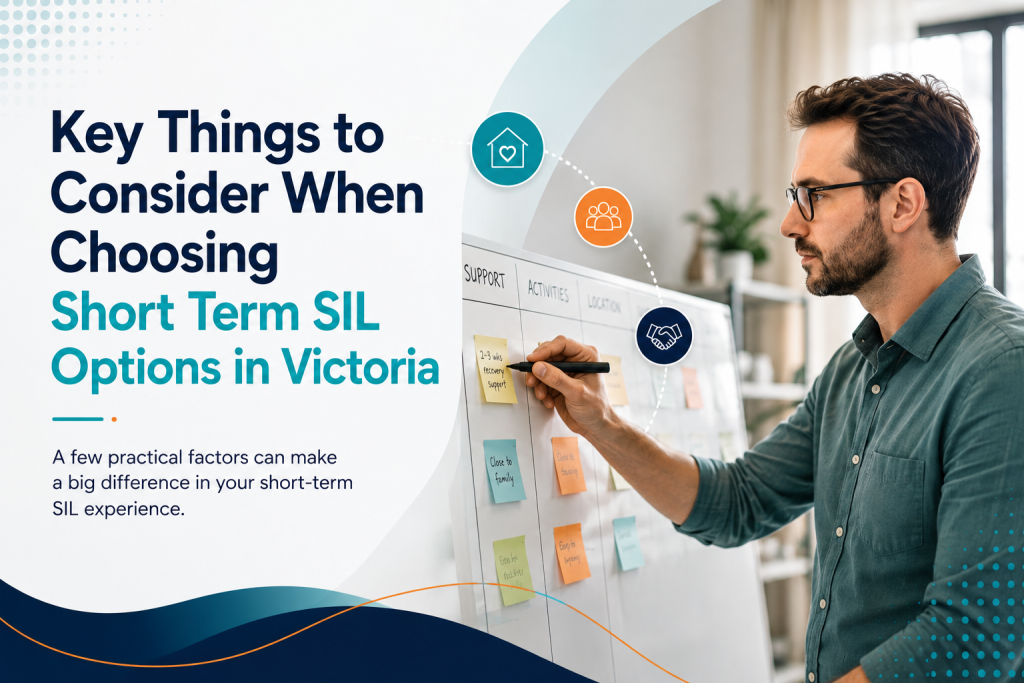
Choosing between short term SIL options Victoria providers list isn’t just about finding an available bed. A handful of practical factors tend to make the biggest difference to how comfortable and useful the experience turns out to be, and it’s worth comparing a few homes via SIL accommodation around victoria before settling on one.
Location and Local Access
Victoria is a big state, and where a home sits matters. Our SIL accommodation in Footscray or a home in St. Albans might suit someone wanting proximity to Melbourne’s inner west, while Frankston or Epping could suit participants with family nearby. Think about distance to your medical team, therapists and community activities, and if you’re relocating from regional Victoria, ask providers about transport links and travel support.
Level and Consistency of Support
Ask how many support workers are rostered on, what qualifications they hold, and whether the same faces will be around during your stay. Consistency matters more than people expect for a short placement; high turnover of unfamiliar staff can make an already unsettling transition harder than it needs to be.
Home Suitability and Accessibility
Not every SIL property is built the same way. If you need wheelchair access, modified bathrooms, or sensory-friendly spaces, confirm this before you commit rather than after you arrive. A good provider will walk you through the layout and any accessibility features honestly, including where a home falls short.
Provider Registration and Flexibility
Check that the provider is registered with the NDIS Quality and Safeguards Commission, and don’t be shy about asking for references. Support Nest is a registered NDIS provider operating across Melbourne, and we’re happy to talk through our compliance and support model before anyone decides on anything. It’s also worth asking what happens if your needs change mid-stay or the placement needs extending, since circumstances can shift quickly.
How to Find and Book Short Term SIL Accommodation in Victoria
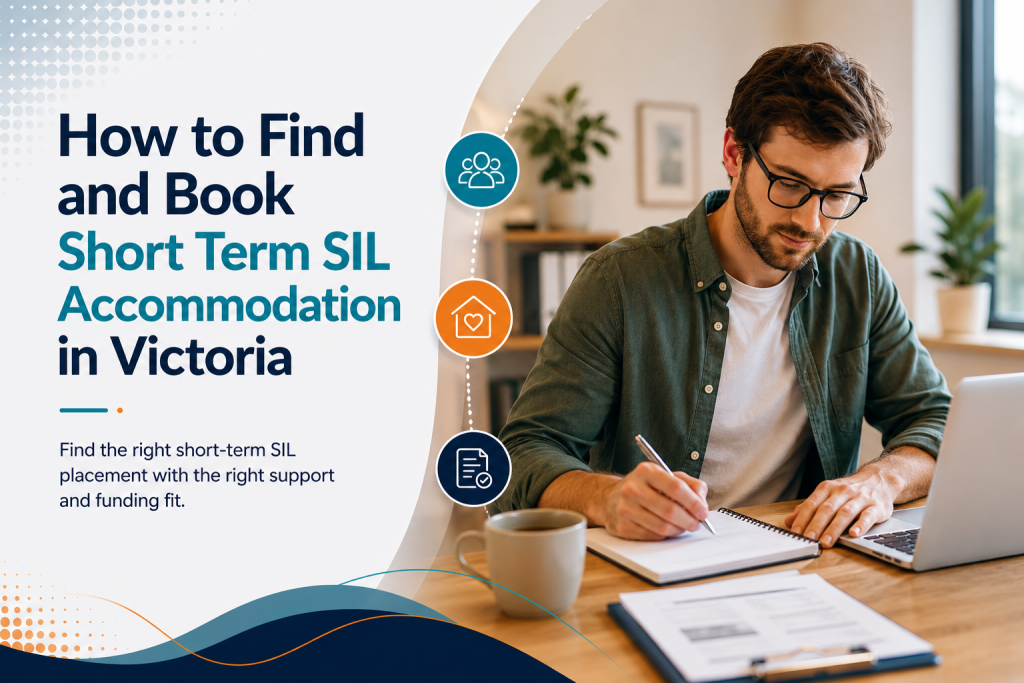
Most participants start this process through their support coordinator or plan manager, who has visibility over current vacancies and can match your funding category to the right placement. If you don’t have a support coordinator, you can approach providers directly, many, including Support Nest, will talk through eligibility and funding before a formal referral is in place.
Working Through Your NDIS Plan
Your plan will usually indicate whether SIL, Short Term Respite, or another support category applies to your situation. Have this conversation early, since funding categories affect which providers you can access and how a booking gets processed. If anything is unclear, the NDIS operational guidelines on short term accommodation and respite and your local area coordinator are good starting points.
What to Ask Before You Book
Before confirming a placement, ask about the exact support hours included, what happens with meals and household costs, whether the home is shared or private, and what happens if you need to extend or leave early. A transparent provider will answer these without hesitation. Vacancies for well-located short-term homes can move quickly, so start the conversation as early as you can, particularly around a known date like a hospital discharge.
Life in Short Term SIL Accommodation: What to Expect
A short-term placement isn’t just somewhere to sleep. Good providers use the time to help participants build practical skills, whether that’s meal planning, using public transport independently, or settling into a new routine. It’s also a chance to trial different support levels and see what an ongoing arrangement might need to look like. Many short-term SIL homes in Victoria sit near shops, parks and public transport so participants stay socially engaged, and pairing a stay with our community participation programs can help keep that momentum going, with family visits and therapy appointments continuing largely uninterrupted.
Frequently Asked Questions
What is supported independent living accommodation? SIL is NDIS-funded support delivered within a person’s home to help with daily tasks such as cooking, cleaning, personal care and budgeting, aimed at building independence while keeping the right level of support on hand.
How do I find NDIS approved SIL providers in Victoria? Start with your support coordinator, who can check registration status through the NDIS Provider Register, or contact registered providers such as Support Nest directly to ask about availability across Melbourne and Victoria.
Where can I find SIL providers offering supported housing in Victoria? Registered providers usually list their homes and locations on their websites, often by suburb. Support coordinators and local area coordinators can also point you toward current vacancies, and independent listing sites such as Housing Hub are a useful way to compare options matching your needs.
How do I find accessible SIL accommodation in regional Victoria? Availability outside metropolitan Melbourne can be more limited, so start early and stay flexible on location where possible. Ask providers directly whether they operate homes in regional areas and confirm accessibility features before committing.
What short term SIL accommodation options are available in Victoria? Options range from shared homes with rostered support staff to more independent setups with drop-in assistance, spanning inner-city Melbourne through to outer suburbs and parts of regional Victoria.
What is short term supported independent living in Victoria? It’s a temporary version of standard SIL, offering the same daily living support but for a defined period rather than an ongoing tenancy, commonly used during transitions, recovery, or as a trial before a longer-term commitment.
How do I book short term SIL support in Victoria? Booking generally starts with your support coordinator or plan manager confirming your funding category, then contacting providers directly to check vacancies. Being upfront about your timeline helps providers match you faster.
How long can I stay in short term SIL accommodation in Melbourne? Stays vary by circumstance and funding, typically ranging from a few weeks to several months, and can sometimes be extended if your situation changes, so discuss flexibility with your provider before booking.
Final Thoughts
Choosing between short term SIL options Victoria providers offer comes down to a few honest questions: does the location work, is the support level right, is the home genuinely suitable, and is the provider one you can trust. Ask questions, visit if you can, and involve your support coordinator early. A short-term placement, done well, can be a genuinely positive step rather than just a stopgap.
If you’d like to explore what’s currently available, take a look at SIL accommodation around victoria or get in touch with our team directly. We’re happy to talk through your options and help you find a home that fits your needs, whether that’s for a few weeks or a longer stay.