Introduction
Finding the right place to live is one of the biggest decisions any NDIS participant will make, and for people looking at accommodation in Frankston Victoria, the choices can feel a little overwhelming at first. Frankston sits about 39 kilometres south-east of Melbourne’s CBD on the eastern shore of Port Phillip Bay, and it’s grown from a seaside day-trip destination into a fully-fledged regional hub for the Mornington Peninsula, complete with its own hospital, arts centre, shopping precinct and one of the cleanest beaches in the state. Between Supported Independent Living (SIL), Specialist Disability Accommodation (SDA), short-term stays and everything in between, it helps to know exactly what you’re comparing before you sign anything, and the suburb itself matters just as much as the support model.
At Support Nest, we work with NDIS participants, families and carers across Victoria every day, and Frankston comes up often because it offers something a lot of areas don’t: a relaxed coastal lifestyle, a well-established town centre around Davey Street and Nepean Highway, and solid transport links back into the city via the Frankston railway line. If you’re weighing up your options, our team can walk you through sil accommodation in frankston and help you match a property, a neighbourhood and a support model to your actual goals, rather than the other way around.
Key Takeaways
Choosing accommodation isn’t just about four walls and a roof; it’s about whether the home, and the suburb around it, actually supports the life you want to lead. Readers of this guide will come away understanding the difference between SIL and SDA, why Frankston’s geography and transport links matter as much as the funding category, and what questions to ask a provider before you commit to a lease or a support arrangement. We’ll also touch on how location within Frankston, from the beachside pockets of Frankston South to the more affordable streets of Frankston North and Karingal, along with accessibility features and the quality of on-site support, all affect day-to-day wellbeing, not just on paper but in practice. By the end, you should feel confident enough to start shortlisting properties in Frankston with a clear sense of what “good” looks like, and where Support Nest can help fill in the gaps along the way.
Understanding the Different Types of NDIS Accommodation
Before you start inspecting properties, it’s worth getting your head around the terminology, because providers and NDIS planners use these terms quite precisely.
Supported Independent Living (SIL)
SIL refers to the support you receive at home, not the home itself. It covers help from support workers with daily tasks like cooking, cleaning, personal care and building life skills, and it’s usually funded through the Core Support budget in your plan. Depending on your needs, support might be rostered for a few hours a day or available around the clock, and it’s often shared across housemates who live in the same property.
Specialist Disability Accommodation (SDA)
SDA is the physical dwelling: purpose-built or modified housing designed for people with extreme functional impairment or very high support needs. Not every participant qualifies for SDA funding, and it’s assessed separately from SIL. Some people in Frankston have both SIL and SDA funding in their plan, which covers the support and the property together.
Short Term and Medium Term Accommodation
Short Term Accommodation (STA), sometimes still called respite, covers brief stays away from your usual home, whether that’s for a holiday, to give a carer a break, or to trial a new living arrangement. Medium Term Accommodation (MTA) bridges a longer gap, typically while you’re waiting for a permanent home to become available. If you’re still exploring what suits you, it’s worth reading up on Short term SIL Options Victoria before locking in a long-term lease, since a trial period can save a lot of second-guessing later.
Getting to Know Frankston: The Location Behind the Listings
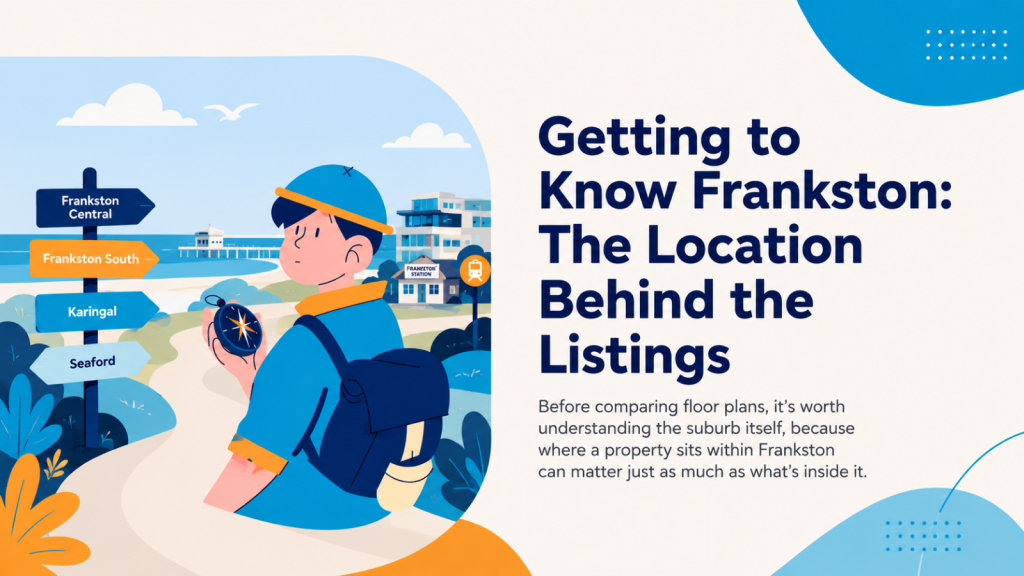
Before comparing floor plans, it’s worth understanding the suburb itself, because where a property sits within Frankston can matter just as much as what’s inside it.
Neighbourhoods and Housing Precincts
Frankston isn’t one uniform strip; it’s made up of quite distinct pockets. Frankston South and the leafy streets around Olivers Hill tend to suit participants who want a quieter, more residential feel, often at a higher price point given the elevated bay views. Frankston North and Karingal are generally more affordable, with established SIL and SDA properties dotted through the area, while Frankston Central, closer to Davey Street and the station, puts participants within walking distance of shops, cafes and health services. Long Island and Mount Erin round out the suburb, and neighbouring areas like Seaford and Langwarrin are also worth a look if you’re open to a short commute back into Frankston proper.
Getting Around
Public transport is one of Frankston’s genuine strengths. The Frankston railway line runs directly into Melbourne’s CBD via Caulfield, with Kananook and Seaford stations providing extra options just north of the town centre, and buses connect the outer suburbs back to the main hub. The Nepean Highway and Peninsula Link give quick car access further down the Mornington Peninsula or back toward the city, which matters for participants who rely on family, support workers or accessible taxis for appointments and social outings.
Health, Shopping and Everyday Services
Frankston is home to Peninsula University Hospital (long known locally as Frankston Hospital), which offers emergency care, rehabilitation and a range of specialist services, so participants with regular medical needs are rarely far from support. Bayside Shopping Centre and Karingal Hub cover most day-to-day shopping, while the Frankston Arts Centre and Frankston Library add cultural and social options that go beyond the basics. For anyone weighing up accommodation in Frankston Victoria, having this level of everyday infrastructure within a short drive or train trip is a genuine drawcard.
Lifestyle and the Foreshore
Frankston’s foreshore and beach are consistently rated among the cleanest in Victoria, and the pier, parks and waterfront paths give participants an accessible, low-cost way to get outdoors and stay socially connected. For many families, this coastal lifestyle, paired with a genuine town centre rather than a sprawl of disconnected retail strips, is exactly why Support Nest sees such steady interest in sil accommodation in frankston compared with some of the more built-up inner-Melbourne options.
What Should NDIS Participants Actually Look For?
This is where most of the practical decision-making happens, and it’s worth slowing down here rather than rushing to the first available property.
Location and Accessibility
Look for accommodation in Frankston Victoria that’s genuinely close to the train line, bus routes, Bayside Shopping Centre or Karingal Hub, and Peninsula University Hospital, particularly if you attend regular medical appointments or therapy sessions. A property tucked away in Frankston South might offer peace and quiet, while one near Frankston Central or Kananook station might suit participants who value walkability over seclusion. Step-free access, wide doorways, accessible bathrooms and appropriate flooring all matter more once you’re living somewhere day to day rather than just visiting.
Compatibility With Housemates and Support Staff
If you’re considering shared SIL housing, ask how housemates are matched. Compatible routines, similar support needs, and shared house rules go a long way toward making a property feel like home rather than just accommodation. It’s also worth asking how consistent the support roster is, since a rotating cast of unfamiliar workers can be unsettling, especially early on.
Provider Track Record and Transparency
A reputable provider should be upfront about pricing, service agreements, staff qualifications, and how they handle incidents or complaints. Check whether the provider is registered with the NDIS Quality and Safeguards Commission, and don’t be afraid to ask for references from current participants or their families. This is an area where Support Nest places a lot of emphasis, because trust between a participant and their provider underpins almost everything else about a successful living arrangement.
Flexibility as Needs Change
Good accommodation should be able to flex with you. Whether your support needs increase, decrease, or simply change in nature over time, ask providers how easily a plan or property arrangement can be adjusted without you having to start the search from scratch.
Funding, Eligibility and Getting the Right Support in Place
Funding for accommodation in Frankston Victoria depends on what’s written into your NDIS plan, and this is often the part participants find most confusing. SIL funding sits under Core Supports and is calculated based on an assessment of how many hours of support you reasonably need, and whether that support is rostered or on-call overnight. SDA funding, on the other hand, is assessed against specific housing design categories and only applies to eligible participants with higher support needs.
If you’re unsure where you stand, it’s worth reviewing general guidance on NDIS eligibility for SIL housing Epping, which walks through the assessment process the NDIA typically follows, even if you’re based in Frankston rather than the north side of Melbourne. A support coordinator can also help translate your plan into a shortlist of realistic property options, rather than leaving you to interpret NDIS jargon alone, and this is exactly the kind of hands-on guidance Support Nest provides for families exploring accommodation in Frankston Victoria for the first time.
It’s also useful to look beyond Frankston itself when you’re comparing what’s realistic for your budget and needs. Browsing options for sil accommodation around victoria can give you a broader sense of pricing, property styles and support models across the state, which makes it easier to judge whether a specific Frankston property, whether that’s in Frankston South, Karingal or closer to the station, is genuinely good value or simply convenient. Housing here also tends to be more attainable than in inner-Melbourne suburbs, which matters when you’re weighing up long-term affordability alongside support needs.
Frequently Asked Questions
What types of SIL accommodation options are available in Frankston? Frankston offers a mix of shared SIL homes, standalone units with in-home support, and some SDA-registered properties for participants with higher support needs. Options range from a couple of housemates sharing support to properties designed around a single participant.
What is supported independent living funding in Frankston? SIL funding in Frankston works the same way it does anywhere in Victoria: it’s included in your NDIS plan under Core Supports and covers the cost of support workers helping with daily tasks, personal care, and building independence at home.
How do I apply for NDIS supported accommodation in Frankston? You’ll generally need a request in your NDIS plan for SIL or SDA supports, backed by relevant assessments, before a support coordinator can help you approach providers. Speaking with a provider like Support Nest early can help you understand what documentation the NDIA is likely to ask for.
Are there private NDIS accommodation providers in the Frankston area? Yes, Frankston has a mix of private and community-managed providers offering SIL and SDA housing. It’s worth comparing a few directly, since pricing, house culture, and support models can vary quite a bit between providers.
Short term NDIS accommodation providers Frankston? Several providers in and around Frankston offer STA or respite stays, which can be useful for a short break, a trial run before committing to permanent accommodation, or support during a family emergency.
Can I request a specific type of NDIS accommodation in Frankston, like assisted living? Yes, participants can request the type of accommodation that best matches their needs, provided it’s supported by their NDIS plan and relevant assessments. Being specific about your preferences, whether that’s assisted living, shared SIL, or a standalone unit, helps providers match you appropriately.
What support services come with NDIS accommodation in Frankston? Depending on the property and your plan, support can include personal care, meal preparation, medication assistance, community access, and help with household tasks. Some properties also coordinate allied health visits on-site.
How much does NDIS accommodation cost in Frankston? Costs vary depending on whether you need SIL, SDA, or both, and how many support hours are rostered into your plan. Rent, everyday living costs, and NDIS-funded supports are generally treated separately, so it’s worth asking a provider to break these down clearly before you sign anything.
Conclusion
Choosing accommodation in Frankston Victoria comes down to matching three things properly: the physical property, the support model, and your own goals for independence. Take the time to understand the difference between SIL and SDA, ask providers direct questions about staffing and flexibility, and don’t be afraid to trial an arrangement through short-term accommodation before committing long-term. Frankston’s combination of coastal living, transport access, and community services makes it a genuinely practical choice for many participants and their families.
If you’d like a hand navigating your options, Support Nest can talk you through sil accommodation in frankston and help you find a home and a support arrangement that actually fits your life. Reach out to our team to learn more about how Support Nest’s disability support services can support your next move.